

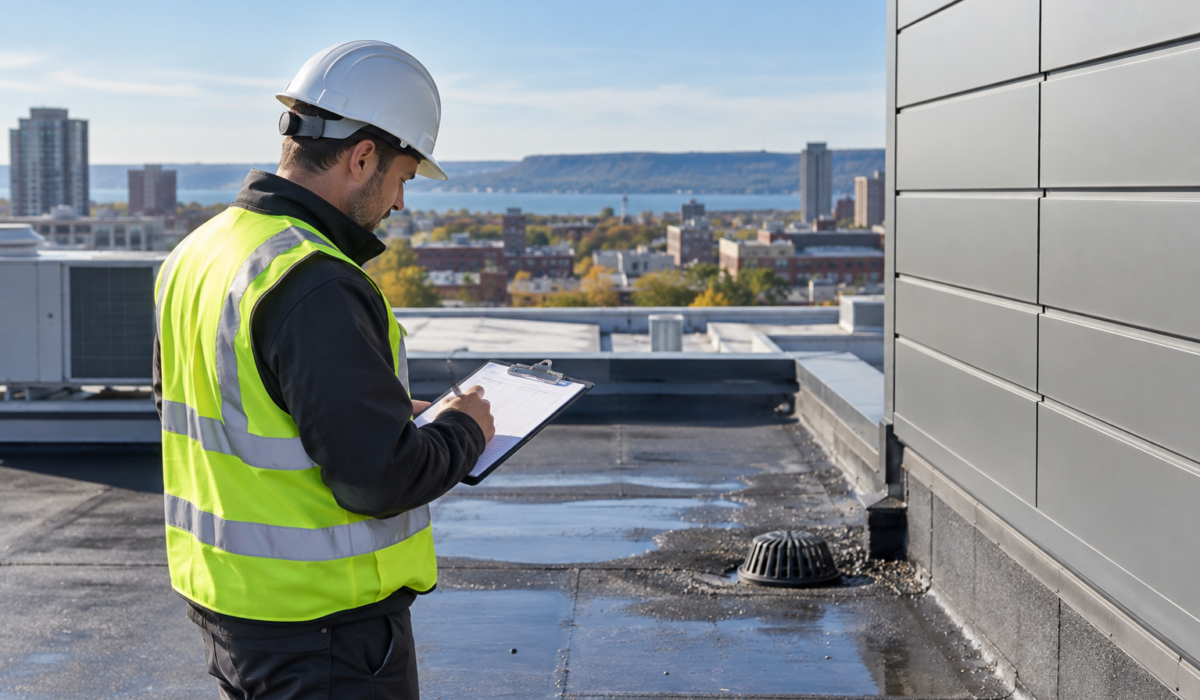
Commercial property maintenance in Hamilton requires more than responding when a leak, damaged panel, or drainage problem becomes visible. Property managers and building owners are responsible for monitoring an exterior system that includes roofing, drainage, waterproofing, siding, cladding, joints, openings, and other areas exposed to changing conditions.
A preventative approach can help identify deterioration earlier, support maintenance budgeting, and reduce the likelihood that minor issues develop into disruptive repairs. For property managers overseeing one building or an entire portfolio, a consistent checklist also provides a practical framework for tracking exterior conditions over time.
Why Preventative Maintenance Matters for Commercial Properties
Preventative property maintenance focuses on identifying developing issues before they become more difficult to manage. Regular inspections can reveal deterioration, drainage concerns, damaged exterior components, and signs of moisture intrusion that may otherwise go unnoticed until interior damage appears.
Early identification does not guarantee that emergency repairs or failures will be avoided. However, it gives property managers more information when planning repairs, setting priorities, and determining when professional assessment is appropriate.
Maintenance records also support lifecycle and capital planning. Understanding which components have been repaired, how exterior conditions are changing, and where problems repeatedly occur can help property managers make better-informed budgeting decisions while limiting unnecessary disruption to tenants and operations.
1. Establish a Preventative Property Maintenance Schedule
Effective commercial building maintenance in Hamilton should be an ongoing process rather than a response to visible damage. Create a schedule that accounts for routine inspections, seasonal conditions, previous repairs, known problem areas, and contractor recommendations.
Keep inspection records and contractor reports together so changes can be tracked over time. If a particular roof section, drainage point, joint, or exterior opening has required repeated attention, include that location in future inspections.
The schedule should also consider larger capital maintenance needs. Connecting day-to-day maintenance records with longer-term planning helps property managers distinguish isolated repairs from recurring conditions that may require a broader solution.
2. Inspect Commercial Roofing Systems
Roofing remains an important part of the building exterior, but it should be assessed alongside other exterior systems. During an inspection, check membrane condition, flashing, seams, penetrations, rooftop equipment interfaces, and visible signs of deterioration.
Previous leak locations and repaired areas should also be reviewed for changes. Signs that warrant closer attention can include damaged materials, separated seams, deteriorated flashing, or conditions around penetrations that appear different from previous inspections.
The purpose of this step is not to turn every property inspection into a detailed roof assessment. When conditions require specialized evaluation, professional commercial roofing support can help determine the appropriate next steps.
3. Check Roof Drainage and Water Management
Water needs a clear route away from the roof and building exterior. Inspect roof drains, scuppers, gutters, and downspouts for debris, visible damage, or restrictions that could interfere with normal drainage.
Look for ponding or standing water and note areas where debris repeatedly accumulates. At ground level, check whether downspouts and other drainage components are directing water away from vulnerable areas rather than allowing it to collect against the building.
Drainage performance connects roofing with waterproofing and the broader building envelope. A problem that begins as restricted water movement can expose nearby materials, joints, and transitions to prolonged moisture.
4. Inspect Waterproofing and Moisture-Prone Areas
Waterproofing inspections should focus on areas where different exterior materials and systems meet. Check expansion joints, seals, transitions, wall-to-roof interfaces, and other moisture-prone locations for visible deterioration.
Failed or deteriorating seals, damaged joints, and recurring wet areas deserve particular attention. Compare current conditions with previous inspection records when possible to determine whether a problem is new or continuing.
Moisture sources are not always obvious from where water becomes visible. When the entry point is unclear or a problem continues after previous repairs, a professional commercial waterproofing assessment can help investigate the affected area.
5. Inspect Commercial Siding and Cladding
Siding and cladding are important parts of commercial exterior maintenance and should be included in every whole-building checklist. Inspect visible surfaces for loose or damaged panels, cracks, open joints, fastener issues, deteriorated sealant, and impact damage.
Pay additional attention to transitions around doors, windows, service penetrations, and other openings. These locations involve changes in materials and details that should be monitored for separation, deterioration, or signs of moisture penetration.
Changes in the appearance or alignment of panels should also be documented. When damage or deterioration requires further assessment, professional commercial siding services can help address exterior and cladding concerns.
6. Look for Early Signs of Water Intrusion
Exterior maintenance should include both outside observations and interior indicators. Water staining, damp areas, ceiling damage, recurring leaks, unexplained moisture, and deterioration near exterior transitions can all indicate a problem requiring investigation.
Property managers should avoid assuming that the location of visible interior water identifies the point where moisture entered the building. Water can travel along materials or concealed spaces before becoming noticeable.
Record where and when moisture appears, including weather conditions when relevant. Photographs and previous leak records can provide useful information when a contractor investigates the source.
7. Prepare the Exterior for Hamilton’s Seasonal Changes
Seasonal property maintenance in Hamilton should account for conditions that can affect exterior systems throughout the year. Freeze-thaw cycles, snow and ice, heavy rainfall, wind events, temperature changes, and debris accumulation can expose existing weaknesses or create new maintenance concerns.
Seasonal planning should focus on inspection timing rather than attempting to predict every possible weather-related problem. Before and after periods of demanding conditions, property managers can review drainage components, visible exterior surfaces, and previously identified problem areas.
Significant storms may also justify additional inspection. Incorporating seasonal and post-storm reviews into the maintenance schedule helps keep exterior monitoring consistent instead of waiting for obvious damage to appear.
8. Document Repairs and Recurring Problems
Good records turn individual inspections into useful long-term information. Maintain inspection dates, photographs, repair records, contractor findings, leak history, warranty documents, and notes about recurring problem locations.
When repairs are completed, record what was addressed and where the work occurred. Future inspections can then determine whether the condition has remained stable or requires additional attention.
Documentation also supports capital planning. A pattern of repeated repairs in the same area may provide important context when deciding whether continued localized work or a more substantial project should be considered.
9. Know When to Schedule a Professional Inspection
Some exterior conditions require more than routine observation. Recurring leaks, visible membrane or cladding damage, persistent drainage problems, unexplained interior moisture, and damage following significant storms are all potential reasons to arrange professional assessment.
Aging exterior systems and repeated repairs may also justify a closer inspection. Property managers planning significant capital work can use professional findings to better understand existing conditions before determining priorities and budgets.
There is no single inspection interval that applies to every commercial property. Building age, exterior systems, previous repairs, known vulnerabilities, and recent conditions should all inform when a commercial property inspection in Hamilton is appropriate.
Build a Long-Term Maintenance Plan for Your Hamilton Property
A checklist provides a practical starting point, but effective property management maintenance in Hamilton depends on coordinating inspections, documentation, repairs, seasonal planning, and professional support across the building exterior.
Roofing, drainage, waterproofing, siding, and cladding should not be treated as completely isolated maintenance concerns. Conditions in one area can affect another, particularly where water movement, joints, penetrations, and material transitions are involved.
For property managers looking for a coordinated approach to preventative building maintenance, Explore Torham’s Property Management Maintenance Package. The goal is to support ongoing exterior maintenance across the property rather than limiting attention to a single building component.