

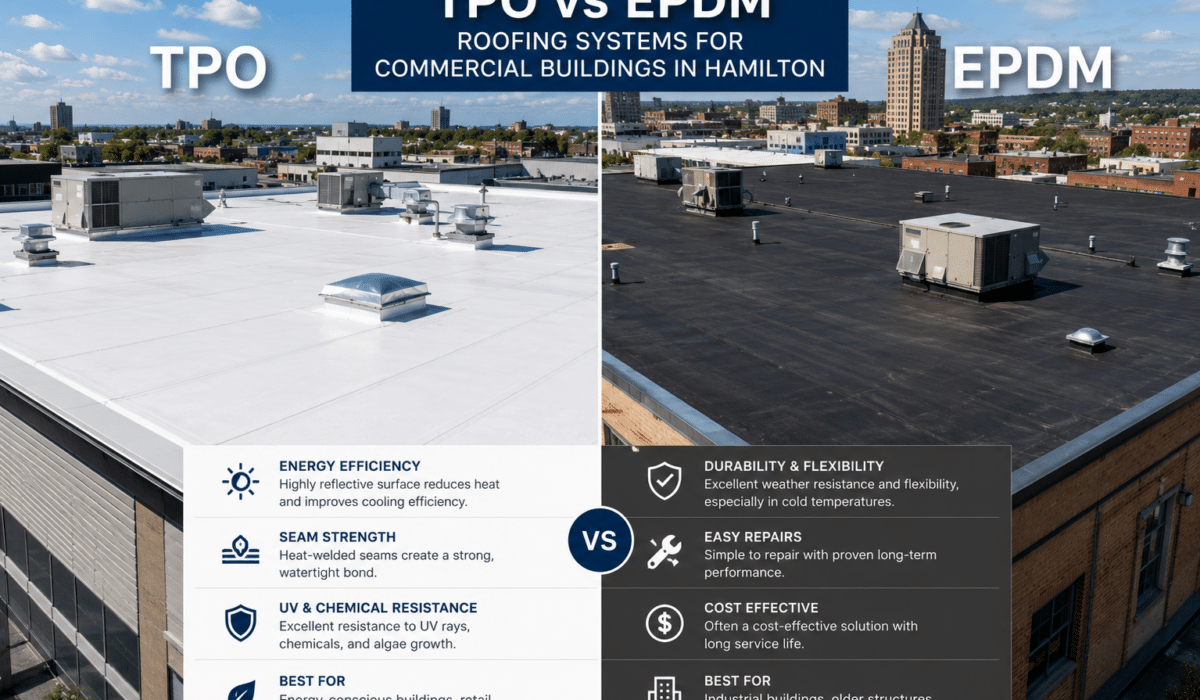
Commercial property owners in Hamilton often face an important decision when planning a roof replacement or new construction project: choosing the right flat roofing system. Two of the most common options for commercial buildings are TPO and EPDM roofing systems. Both materials are widely used across industrial, retail, office, and institutional properties, but they offer different advantages depending on building requirements, energy goals, and long-term maintenance expectations.
Understanding the differences between these commercial roofing systems Hamilton property owners commonly use can help facility managers and building owners make more informed investment decisions.
Understanding TPO Roofing Systems
TPO, or thermoplastic polyolefin, is a single-ply membrane roofing system commonly installed on commercial flat roofs. TPO commercial roofing has become increasingly popular because of its reflective surface, energy efficiency benefits, and heat-welded seam construction.
One of the primary advantages of TPO roofing is solar reflectivity. White TPO membranes reflect UV rays and reduce rooftop heat absorption, which can help improve energy efficiency during warmer months. For commercial facilities with large roof surfaces, this may contribute to lower cooling demands and improved interior comfort.
TPO systems are also known for strong seam performance. Heat-welded seams create a continuous bond that helps resist moisture infiltration and weather-related wear. This makes TPO a strong option for buildings exposed to varying seasonal conditions throughout Hamilton.
In many cases, TPO roofing systems are selected for:
- Office buildings
- Warehouses
- Retail plazas
- Industrial facilities
- Energy-conscious commercial properties
TPO membranes also resist dirt accumulation, algae growth, and UV degradation, helping maintain long-term appearance and performance.
Understanding EPDM Roofing Systems
EPDM, or ethylene propylene diene monomer, is a synthetic rubber roofing membrane widely used in commercial flat roofing Hamilton applications. EPDM systems have been installed across North America for decades and are recognized for durability, flexibility, and long service life.
One of the biggest advantages of EPDM roofing systems is weather resistance. The material performs well under temperature fluctuations and remains flexible even during colder winter conditions common in Southern Ontario. This flexibility can help reduce stress-related cracking over time.
EPDM membranes are typically black, allowing them to absorb heat more readily than reflective TPO systems. While this may increase rooftop temperatures during summer months, some building owners prefer EPDM in colder climates where heat retention can be beneficial.
EPDM roofing is commonly used for:
- Industrial facilities
- Multi-unit commercial properties
- Older commercial structures
- Buildings requiring durable long-term waterproofing
EPDM systems are also relatively straightforward to repair and maintain, making them a practical option for many property managers overseeing aging roof systems.
Comparing TPO vs EPDM Roofing
When evaluating TPO vs EPDM roofing, several factors should be considered beyond initial installation costs. The right system depends on the building’s operational needs, environmental exposure, and long-term maintenance goals.
Energy Efficiency
TPO roofing is generally considered more energy efficient because of its reflective surface. Buildings seeking improved cooling efficiency or sustainability objectives often favor TPO systems for this reason.
EPDM absorbs more heat due to its darker surface. While this may not provide the same summer energy benefits, it can offer advantages during colder seasons.
Durability and Weather Resistance
Both roofing systems offer strong durability when professionally installed and maintained. EPDM has a long proven performance history and performs particularly well in freeze-thaw conditions. TPO systems continue to improve technologically and provide excellent resistance to punctures, UV exposure, and seam failure.
Hamilton’s climate places significant stress on commercial roofing systems, making preventative inspections and maintenance essential regardless of material choice.
Maintenance Expectations
Commercial roof repair and maintenance requirements differ slightly between systems. EPDM repairs are often simpler because of the membrane’s flexibility and repair compatibility. TPO systems may require specialized welding equipment for seam repairs but generally maintain strong watertight performance over time.
Routine inspections remain critical for both systems. Drainage evaluations, flashing inspections, and membrane condition assessments help maximize roof lifespan and reduce long-term repair costs.
Installation Considerations
Installation quality plays a major role in overall roof performance. Improper seam installation, poor drainage planning, or inadequate flashing details can shorten system lifespan regardless of roofing material.
Working with an experienced contractor specializing in commercial roofing helps ensure the roofing system is properly matched to the building’s structure, insulation requirements, and operational needs.
Choosing the Right Roofing System for Your Building
There is no universal answer when comparing TPO vs EPDM roofing systems. Each building has unique operational requirements, budget considerations, and performance priorities.
TPO may be the better option for commercial buildings prioritizing:
- Energy efficiency
- Reflective roofing performance
- Modern membrane technology
- Lower rooftop heat absorption
EPDM may be better suited for properties prioritizing:
- Long-term flexibility
- Proven cold-weather performance
- Simplified repairs
- Durable waterproofing performance
Property managers and facility operators should also consider long-term lifecycle planning rather than focusing solely on upfront installation costs. Maintenance requirements, energy performance, and repair accessibility all contribute to total ownership costs over time.
Long-Term Commercial Roofing Planning
Commercial roofing systems are major capital investments that directly affect building performance and operating expenses. Selecting the appropriate roofing material requires careful evaluation of the property’s environmental exposure, occupancy needs, maintenance strategy, and long-term budget planning.
Whether installing a new flat roofing system for commercial buildings or planning a replacement project, proactive consultation with experienced roofing professionals helps reduce risk and improve long-term performance outcomes.
To discuss the best roofing solution for your commercial property, Contact Torham Exterior Solutions to schedule a commercial roof inspection.