

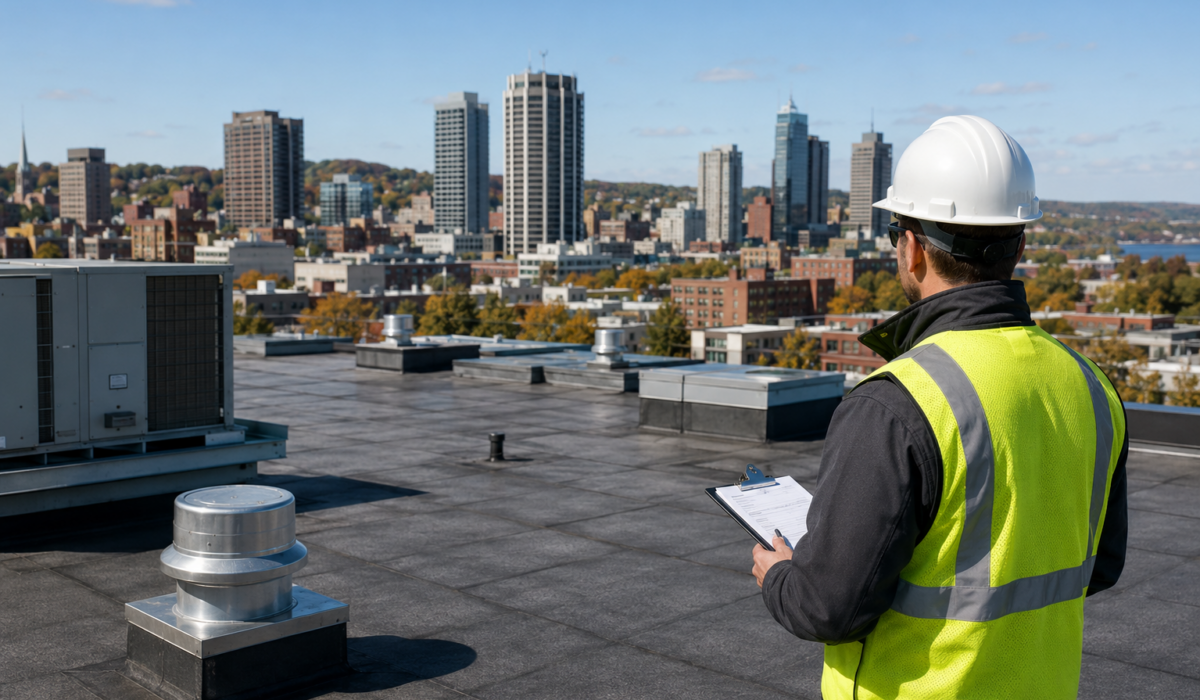
Commercial property owners are entering 2026 with a growing focus on protecting building assets, controlling operating costs, and maximizing the lifespan of existing roofing systems. Across Hamilton, changing market conditions and evolving building performance expectations are influencing how organizations approach roof management.
For property managers, facility operators, and commercial asset owners, understanding emerging commercial roofing trends can help support smarter investment decisions and reduce the risk of unexpected expenses. The following trends are expected to play an important role in the local market throughout 2026.
Preventative Maintenance Is Becoming a Core Business Strategy
One of the most important commercial roofing trends is the shift away from reactive repairs toward preventative roof maintenance.
Many commercial roofs can perform effectively for decades when supported by regular inspections and ongoing maintenance. However, small issues such as membrane damage, blocked drainage systems, flashing deterioration, or minor leaks can quickly develop into larger problems when left unaddressed.
As a result, more Hamilton property owners are implementing structured maintenance programs designed to identify concerns before they affect building operations. Preventative roof maintenance helps reduce emergency repair costs, minimize tenant disruptions, and extend the useful life of roofing systems.
For organizations responsible for multiple facilities, routine inspections also provide valuable documentation that supports budgeting and long-term asset planning.
Commercial Roof Lifecycle Planning Is Gaining Importance
Another major trend is the growing emphasis on commercial roof lifecycle planning.
Historically, many building owners treated roofing projects as isolated capital expenses. Today, roofing systems are increasingly viewed as long-term assets that require strategic management throughout their service life.
Lifecycle planning involves evaluating roof condition, tracking maintenance history, forecasting future repairs, and preparing for eventual replacement. This approach allows property owners to make informed financial decisions rather than responding to unexpected failures.
Hamilton businesses that adopt lifecycle planning strategies often gain greater control over capital expenditures while reducing the likelihood of disruptive emergency roofing projects. By understanding where a roof stands within its lifespan, organizations can prioritize investments more effectively and avoid unnecessary costs.
Property managers looking to strengthen their planning efforts may also benefit from reviewing Commercial Roof Maintenance Strategies for Hamilton Property Managers, which explores maintenance best practices in greater detail.
Energy Efficient Commercial Roofing Continues to Expand
Energy efficiency remains a top priority for commercial building owners across Ontario.
As utility costs continue to influence operating budgets, many organizations are evaluating roofing systems that contribute to improved thermal performance and lower energy consumption. Modern commercial roofing systems often incorporate enhanced insulation, reflective roofing materials, and designs intended to support greater energy efficiency.
Energy efficient commercial roofing can help reduce heat gain during warmer months while improving indoor comfort levels throughout the year. These performance benefits may contribute to lower operating expenses and support broader sustainability initiatives.
In addition, many property owners now recognize that roofing systems play a significant role in overall building performance. Rather than viewing the roof solely as weather protection, it is increasingly considered an important component of energy management and asset optimization.
Waterproofing Is Becoming Part of a Broader Asset Protection Strategy
Commercial building owners are placing greater emphasis on protecting the entire building envelope.
While roofing systems provide the first line of defense against weather, effective moisture management requires a comprehensive approach. This is contributing to increased interest in professional waterproofing solutions that help protect foundations, walls, roofing assemblies, and other vulnerable building components.
Water intrusion can lead to structural deterioration, mold growth, interior damage, and operational disruptions. These risks make moisture management a critical concern for commercial properties.
In 2026, more property owners are expected to evaluate roofing performance alongside broader building envelope considerations. Integrating waterproofing strategies with roofing maintenance can help improve long-term durability and strengthen commercial building asset protection efforts.
Greater Focus on System Selection and Performance
Commercial property owners are also becoming more involved in selecting roofing systems that align with specific building requirements.
Different facilities have unique operational needs, occupancy patterns, drainage requirements, and maintenance considerations. As a result, system selection is increasingly based on long-term performance rather than upfront installation costs alone.
For some commercial properties, modern sloped roofing systems may offer advantages related to water drainage, durability, and architectural appearance. Other facilities may benefit from low-slope membrane systems designed for large commercial structures.
Property owners are taking a more strategic approach by evaluating lifecycle costs, maintenance requirements, energy performance, and expected service life before making roofing decisions.
Those comparing membrane roofing options may find valuable information in TPO vs EPDM Roofing Systems for Commercial Buildings in Hamilton, which examines important considerations when selecting a commercial roofing system.
Looking Ahead to 2026
The future of commercial roofing Hamilton property owners face in 2026 is increasingly focused on planning, efficiency, and long-term asset protection. Organizations that prioritize preventative maintenance, lifecycle planning, energy performance, and comprehensive building envelope strategies will be better positioned to protect their investments and control operating costs.
Whether managing a single commercial facility or an extensive property portfolio, staying ahead of emerging commercial roofing trends can help reduce risk, improve building performance, and support stronger long-term outcomes.
Schedule a Commercial Roof Inspection through Contact Torham Exterior Solutions to evaluate your building’s roofing condition and develop a proactive strategy for long-term asset protection.